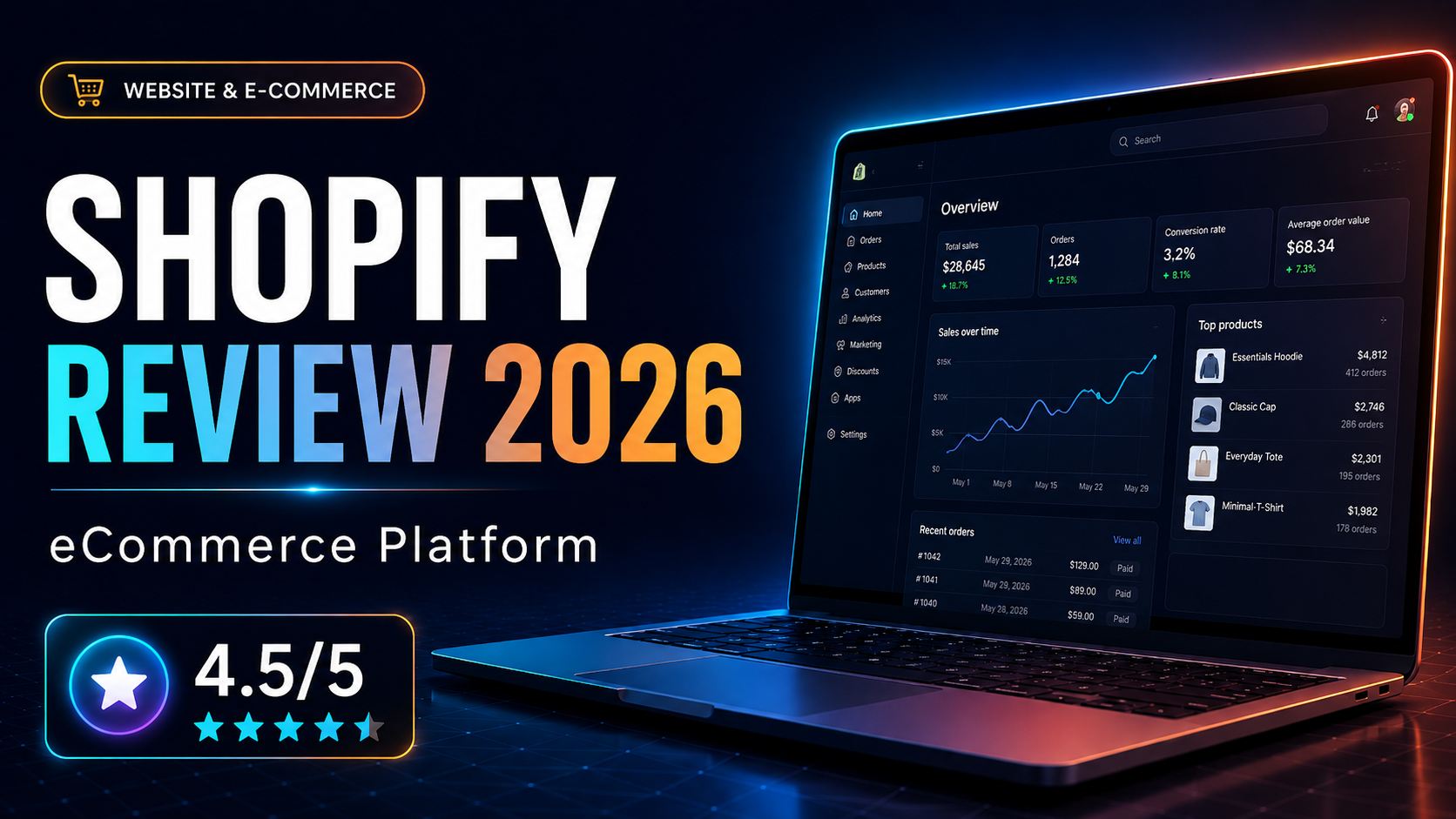
Shopify remains one of the most popular ecommerce platforms for businesses that want a hosted, low-friction path to selling online. We reviewed it with a focus on setup speed, day-to-day usability, conversion tools, and long-term scalability.
What Is Shopify?
Shopify remains one of the most popular ecommerce platforms for businesses that want a hosted, low-friction path to selling online. We reviewed it with a focus on setup speed, day-to-day usability, conversion tools, and long-term scalability.
How We Evaluated It
We looked at store setup, product management, theme flexibility, app dependency, checkout performance, and how well Shopify supports typical affiliate and brand-side marketing workflows such as content, bundles, and international selling.
Key Features and Strengths
Quick setup and clean backend
Shopify is one of the easiest ways to get a serious online store live. The admin is beginner-friendly and the platform handles hosting, updates, and security for you.
Strong sales ecosystem
The app marketplace, checkout flow, and sales features are what make Shopify powerful. Whether you need upsells, subscriptions, or email tools, the ecosystem is broad enough to support growth.
Good fit for scale
As stores expand, Shopify usually remains easier to manage than many open-source alternatives. The trade-off is that flexibility often comes through paid apps or premium development rather than built-in depth.
Pricing and Value
The base price only tells part of the story. Shopify can be affordable to start, but real operating costs often include paid apps, premium themes, and additional services. Even so, many merchants accept the trade-off because the platform reduces technical headaches and time to launch.
Who It Is Best For
- Launching a store quickly with minimal technical work
- Running a product-focused brand on a hosted platform
- Scaling with apps and integrations
- Selling across multiple channels and markets
Who Should Look Elsewhere
- You want full control over code and server setup
- You want the lowest long-term operating cost
- Your site depends heavily on content publishing
Alternatives to Consider
WooCommerce
Better when you want deeper WordPress control and more flexibility.
BigCommerce
A viable hosted alternative for larger catalog needs.
Frequently Asked Questions
Is Shopify worth it for beginners?
Yes, especially if you value simplicity and fast setup more than maximum flexibility.
What is the biggest downside of Shopify?
Ongoing app and platform costs can grow faster than expected as your store expands.
Final Verdict
Shopify is still one of the best options for launching and scaling an online store without managing technical infrastructure. It is especially strong for businesses that prioritise speed, reliability, and a polished sales experience.